
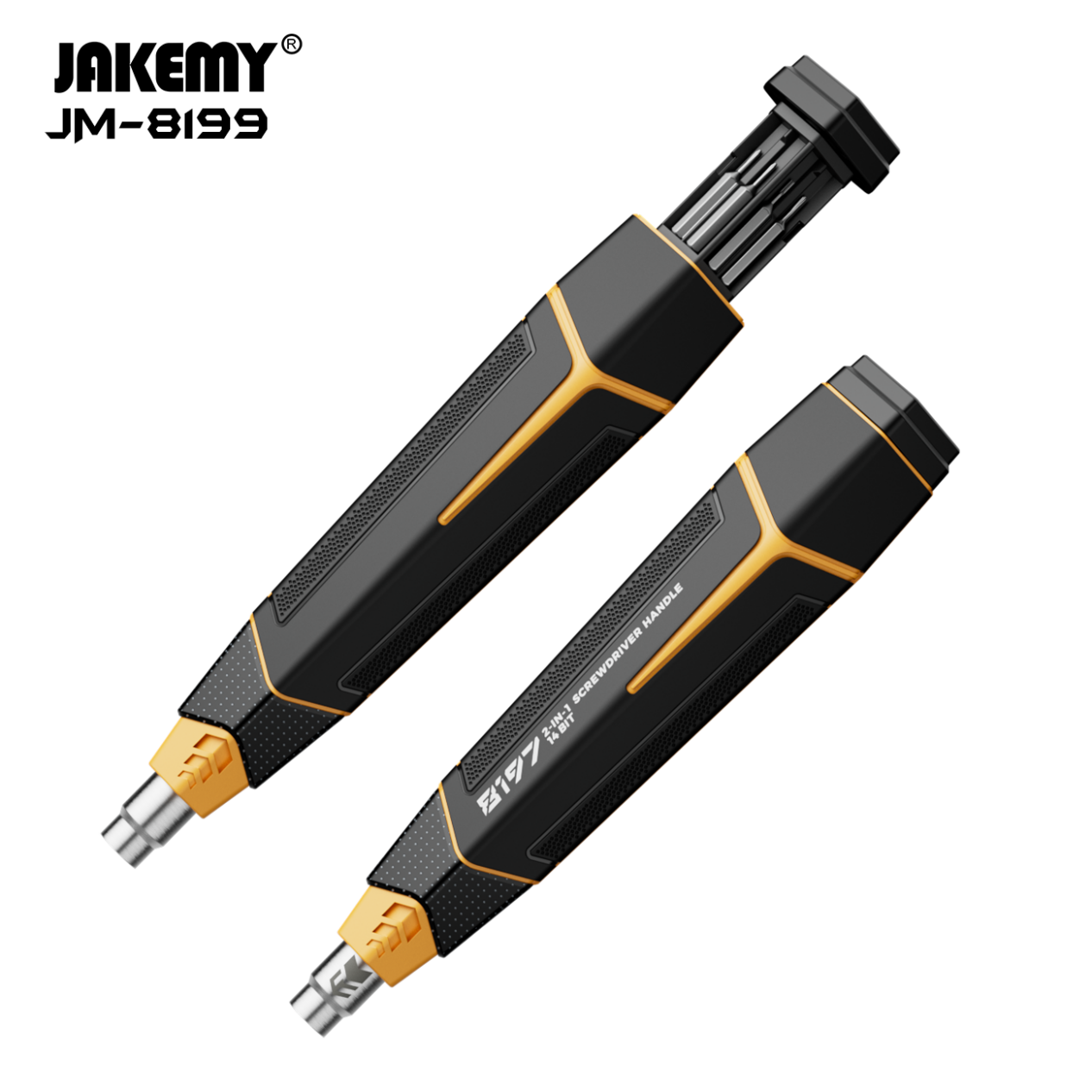
As a company focused on practical repair solutions, we often evaluate how a single toolkit performs across different everyday repair scenarios. In recent internal testing, we explored how Jakemy JM-8199 can be applied from small electronic devices such as smartphones to light household furniture adjustments. This evaluation is not about replacing specialized tools, but about understanding how a unified kit can support multiple maintenance tasks in a controlled environment. We observed how different screw types, grip requirements, and material surfaces interact with one set of interchangeable heads and ergonomic handles made from ABS, TPR, or TPU materials. Our goal is to better understand usability consistency for B2B clients who manage varied repair needs across product lines.
Cross-device usability in practice
In this section, we focus on how a universal kit performs when switching between electronic devices and small household components. During application, Jakemy JM-8199 demonstrates consistent torque control when handling precision screws found in compact electronics, while also offering sufficient leverage for basic furniture assembly tasks such as tightening hinges or brackets. We found that handle texture and bit stability play an important role in reducing slippage during extended use. For our engineering team, Jakemy provides a reference design that balances portability with functional coverage across different repair environments. Instead of relying on multiple separate kits, we evaluate how one structured system can reduce tool switching and improve workflow continuity for technicians working across varied maintenance requests. This approach is particularly relevant for B2B service teams managing diverse product categories.
Material selection and handling experience
In evaluating tool durability and handling experience, our team pays attention to both structural design and user comfort during prolonged use. The kit developed under Jakemy includes ergonomic considerations that support stable grip performance, especially when alternating between fine electronic components and more rigid mechanical fittings. We also assess how ABS, TPR, and TPU materials contribute to reducing hand fatigue while maintaining control accuracy. In field simulations, technicians reported that consistent bit alignment reduces unnecessary adjustment time, which is important in structured maintenance environments. Rather than focusing on isolated use cases, we examine how integrated tool design supports multi-scenario workflows. This perspective helps us understand how service teams can streamline operations when dealing with mixed equipment types within a single maintenance cycle.
Conclusion: From single kit to multi-scenario application
Our evaluation shows how a unified tool system can support a wide range of maintenance contexts without requiring multiple separate kits. The tested Jakemy JM-8199 demonstrates practical adaptability when transitioning between compact electronics and basic furniture adjustments, especially in structured B2B maintenance environments. We believe Jakemy provides a coherent design direction for teams seeking consistent handling across varied repair tasks. Instead of treating each application separately, we focus on how integrated tool design improves operational continuity and reduces unnecessary tool changes. This perspective helps us refine future solution planning for service teams managing diverse equipment portfolios with Jakemy JM-8199 supporting consistency in practice.