
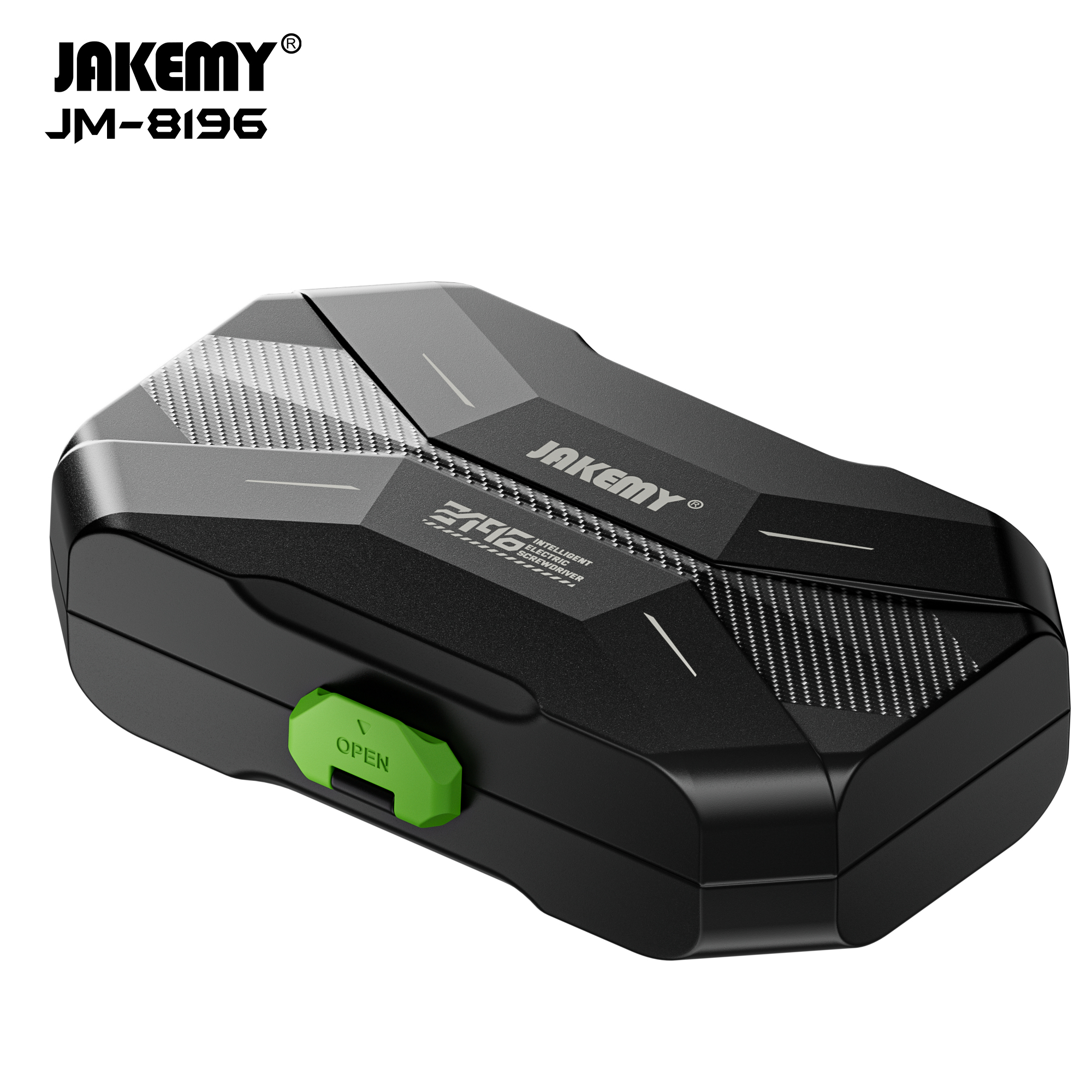
We design and develop professional handheld assembly tools for industrial production environments where consistency and operational control are important. In many manufacturing setups, teams often compare wired and wireless electric screwdrivers to understand how each option supports daily assembly tasks. Wired systems usually provide continuous power through a direct connection, which supports stable operation in fixed stations. Wireless systems rely on rechargeable energy sources and allow more flexible movement across different work areas. Our company focuses on helping clients evaluate these differences based on real production requirements rather than assumptions. In this context, Jakemy develops solutions such as the Jakemy JM-8196 to support structured assembly needs in controlled working environments.
Power Supply Behavior in Assembly Use
Power delivery is one of the most practical differences between wired and wireless screwdriver systems. Wired tools are generally used in fixed positions where continuous operation is required, since they draw power directly from a stable source. This helps reduce interruptions related to energy management. Wireless tools provide mobility across different workstations, but they require planned charging cycles to maintain consistent workflow performance. In production planning, we consider how these systems integrate into line structure and operator routines. The Jakemy JM-8196 is designed to support stable torque output behavior, making it suitable for assembly tasks that require controlled and repeatable fastening performance in industrial environments.
Handling Experience and Work Environment Fit
Ergonomic factors also influence how electric screwdrivers are selected for industrial use. Grip design, weight balance, and trigger response all affect operator comfort during repetitive tasks. Wired tools are often positioned in fixed stations, while wireless tools are used in layouts that require movement flexibility. Material choices such as ABS, TPR, and TPU are applied to improve durability and handling comfort in daily production use. Jakemy integrates these design considerations into its product development approach for professional assembly tools. The Jakemy JM-8196 supports stable handling and consistent operation, helping operators maintain controlled performance during extended working sessions in structured environments.
Conclusion
Wired and wireless electric screwdrivers each serve different roles depending on production structure and workflow requirements. Wired systems are more suitable for continuous operation in fixed positions, while wireless systems support flexible movement across multiple stations. Our company evaluates these options based on operational stability, ergonomic needs, and production consistency. Jakemy develops tools that align with these practical requirements in industrial applications. The Jakemy JM-8196 is designed for assembly environments where controlled performance is important. Clients can send inquiries by filling in contact details and required product information so our team can provide further technical communication based on specific needs.