
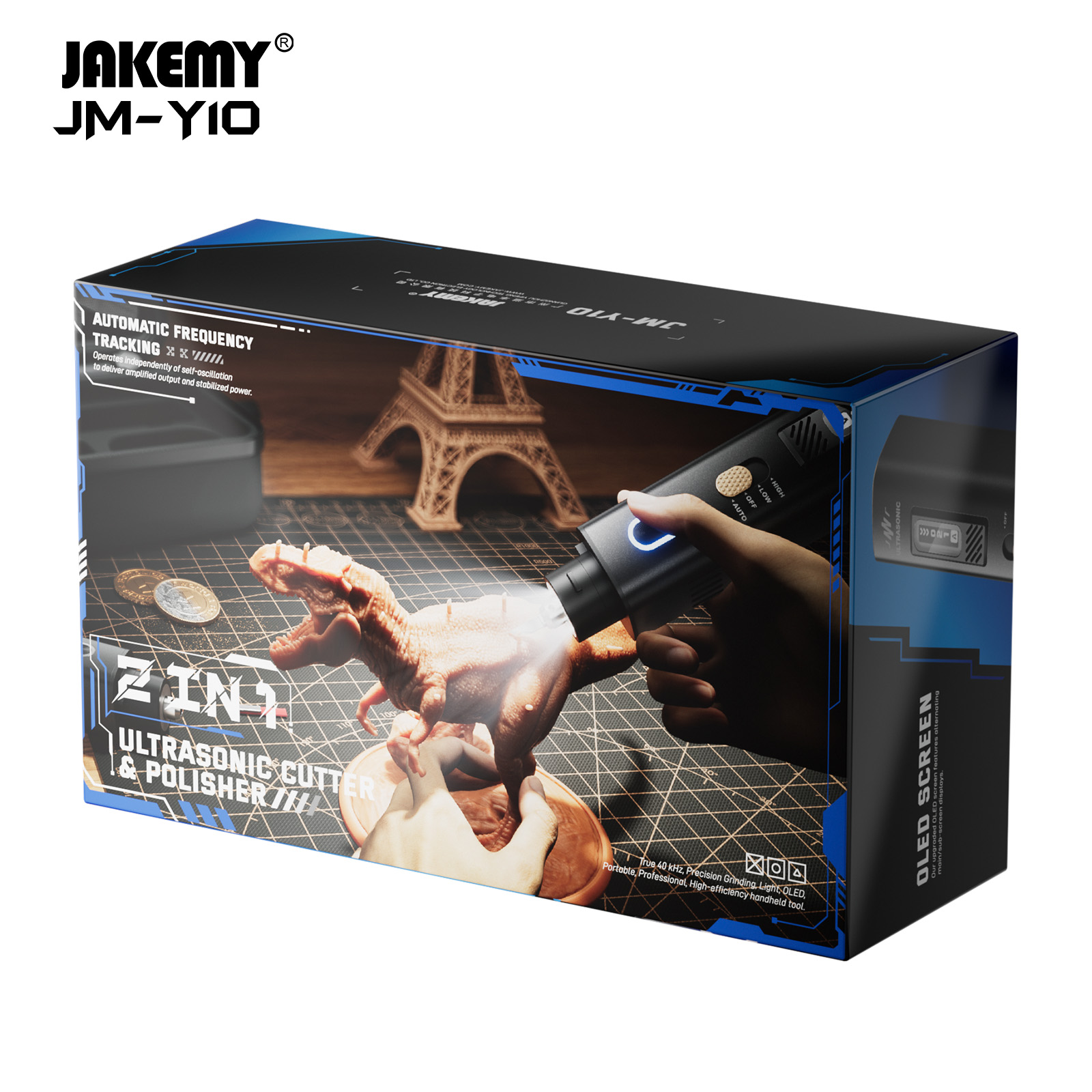
We at Jakemy design tools for DIY and craft users who require stable cutting performance in workshop environments. The JM-Y10 Ultrasonic Cutter supports controlled vibration cutting for plastics, leather, foam, and thin wood used in small projects. Controlled cutting behavior helps maintain accuracy when working on detailed craft assemblies. Our tool structure reduces variation during repeated cutting actions in compact workshop setups. It is suitable for model components and decorative parts requiring careful alignment. Users benefit from stable handling when switching materials within one workflow. Workshop consistency improves through controlled vibration output during operation cycles.
Material Cutting Control in Craft Work
Precision cutting in material shaping requires consistent control across different substrate types. Our engineering approach focuses on stable handheld performance during repetitive craft operations. The JM-Y10 Ultrasonic Cutter is applied when vibration assisted cutting improves edge accuracy in fine detail work. This helps reduce irregular trimming and supports structured workshop output in practical use. Material response differs across plastics, leather, and wood, requiring controlled energy delivery during cutting. Stable tool performance allows predictable results across repeated craft operations. The design supports alignment accuracy when handling fine components in workshop environments. We also refine usability and handling comfort for extended usage periods. Vibration control is adjusted for different material thickness levels to maintain consistency.
Creative Workshop Applications
Creative workshop environments involve mixed materials that demand consistent cutting behavior during production stages. Handheld vibration supported tools improve alignment when shaping plastic and leather components. Our design integrates structured engineering to maintain repeatable performance in professional settings. The JM-Y10 Ultrasonic Cutter assists model building and decorative tasks requiring fine adjustment. Material compatibility supports efficient workflow across different craft production stages. Users working on prototypes require stable cutting performance for repeated adjustments. Controlled vibration reduces surface damage when shaping delicate components in detail work. The tool helps maintain alignment during multi step assembly processes in workshops. Feedback from users contributes to continuous improvement of handling stability and operational consistency. Repeatable output remains important for maintaining quality across small production batches and iterative design work.
Conclusion
Controlled cutting tools support structured DIY and craft workflows where material precision influences final assembly quality. Jakemy focuses on stable engineering design for plastics, leather, and thin wood applications used in workshop environments. Vibration based cutting assistance helps maintain consistent edge quality during detailed craft tasks. Users working in craft environments benefit from predictable cutting behavior across different production stages. The tool structure supports ergonomic handling during extended workshop activity cycles. We maintain focus on practical application requirements in professional production settings rather than abstract descriptions. Assembly precision improves when users apply controlled cutting techniques in repetitive work processes. Craft outcomes become more stable when workflow steps are clearly structured and repeated across projects. Users can submit inquiries through product pages by providing required specifications for response and technical matching support. This approach helps ensure efficient communication between workshop requirements and tool configuration needs in real use.