
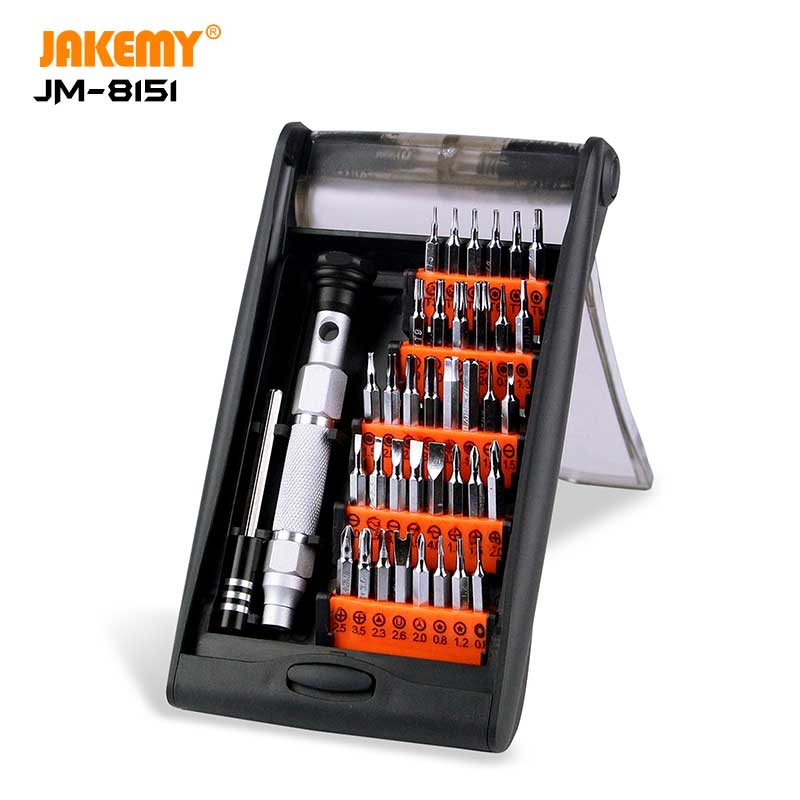
In our product development work, we often evaluate how different precision screwdriver kits perform in real assembly and maintenance environments. One common comparison is between our Jakemy JM-8151 and the AXTH 37in1 Precision Screwdriver Set. Both kits are designed for detailed electronic repair tasks such as device disassembly, component replacement, and routine maintenance. As a team working with professional tools under the brand Jakemy, we focus on functional structure, grip comfort, and bit selection stability. In this comparison, we share practical observations based on usage scenarios rather than marketing claims, helping users understand how each solution behaves in typical working conditions.
Design and handling approach
In daily use, design and handling often influence how efficiently small repair tasks are completed. Jakemy JM-8151 is structured with a focus on controlled torque application and a balanced handle design that supports steady operation during detailed work. The AXTH 37in1 Precision Screwdriver Set provides a compact multi-bit layout that allows quick bit switching in different repair situations. While both solutions are used for electronic devices, their internal organization of tools differs in how the bits are stored and accessed. We observe that handle texture and grip feedback also affect user consistency during longer working sessions, especially when multiple fastening points are involved.
Tool configuration and application scope
In terms of tool configuration, Jakemy JM-8151 is arranged to support structured bit selection that fits a range of precision tasks involving small electronic components. The AXTH 37in1 Precision Screwdriver Set emphasizes a wider selection of interchangeable bits stored within a compact case design. From our experience at Jakemy, we notice that organized storage layout can reduce time spent searching for specific bit types during repetitive tasks. The internal magnetic retention system in both kits helps maintain bit stability during use, although the positioning approach differs between the two designs. These structural differences influence how users adapt the tools across various electronic maintenance scenarios.
Conclusion
Overall, both tool sets serve structured needs in precision electronic maintenance, but they differ in how users interact with their internal organization and handling experience. The AXTH 37in1 Precision Screwdriver Set offers a flexible bit arrangement suitable for varied task switching, while our Jakemy approach focuses on stable handling and consistent operational feedback during detailed work. In practical evaluation sessions, we observe that workflow efficiency is often influenced by how quickly users can identify and secure the correct bit type. When selecting between these configurations, users may consider their working habits and the level of structure required in daily operations. For users seeking a structured and controlled handling experience, we provide further product information through our official inquiry channel where specifications can be reviewed and requirements submitted directly. We also continue refining internal testing methods to align product structure with professional electronic maintenance workflows across different working environments while maintaining consistent evaluation standards for precision tool usability and operational reliability in structured technical applications across controlled assembly processes and inspection routines.