
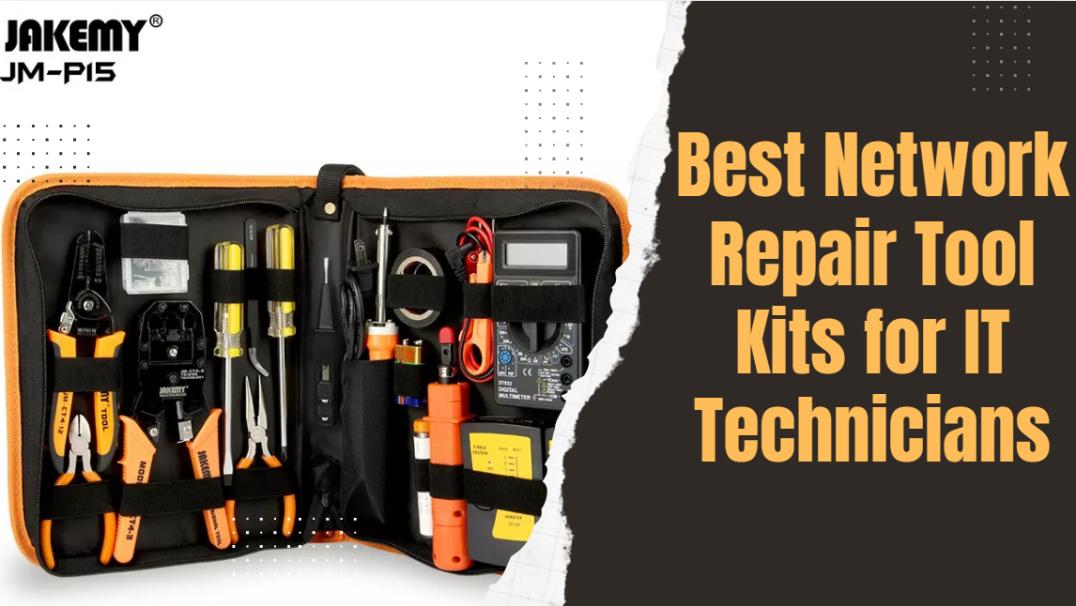
A field technician without the right tools is like a surgeon without a scalpel: the skill is there, but the job simply cannot get done. For IT teams handling network infrastructure, a well-stocked network repair tool kit is not optional. It is the difference between a fast, clean fix and a drawn-out downtime event. Here is what every team lead and procurement manager should know before placing an order.
What Should a Network Repair Tool Kit Include for Your Technician Team?
If you manage a team of technicians or procure tools for IT operations, this is a practical baseline checklist to help standardize your team’s tool loadout across the board:
- Screwdriversare the most basic starting point. Your kit needs both Phillips and flathead options that cover the screw types commonly found in networking hardware, patch panels, and server enclosures. Precision matters here, since cheap bits strip screws and stripped screws on active infrastructure are nobody’s idea of a good time.
- Crimping toolscome next. Any technician who regularly terminates Ethernet cables needs a reliable crimping plier. A bad crimp means an unstable connection, and unstable connections are often the hardest network faults to trace.
- Network testersverify cable continuity and help pinpoint wiring faults without guesswork. Pair them with a multimeter for broader electrical diagnostics, and your team can handle a much wider range of field problems.
- Wire strippers and diagonal pliershandle the prep work. Clean cable preparation is the foundation of a good termination, so these tools belong in every kit without exception.
- Registered jacks,specifically 6P and 8P (RJ11 and RJ45), should always be on hand. Running out of connectors mid-job is the kind of avoidable delay that makes clients unhappy.
- Punch-down toolsare essential for structured cabling work. Whether your team is terminating keystone jacks or patch panel ports, a reliable punch-down tool gets the job done cleanly and to spec.
- Soldering equipment, including a soldering iron, solder wire, and insulating tape, rounds out the kit for any work that involves direct wire joins or component-level repair.
- Other than the tools themselves, storage and organizationmatter more than most people expect. A structured case with dedicated slots keeps everything in place, saves time on-site, and reduces tool loss, which is a hidden cost that procurement teams often underestimate.
Where to Find a Network Repair Tool Kit: Two Paths Worth Knowing
The right source depends on your scale of operation and how much control you want over the product.
Source from a Manufacturer
For IT service companies, system integrators, and managed service providers (MSPs), a direct manufacturer relationship is the smarter move. Manufacturers offer OEM and ODM customization, meaning you can brand the kit with your company logo, adjust the accessory configuration to match your specific job types, and negotiate better unit pricing at volume.
Supply is also more stable and scalable, which matters when you are equipping a growing team or fulfilling a large client contract. The trade-off is lead time and minimum order requirements, but for businesses with predictable procurement cycles, those are manageable factors.
Purchase from a Retailer
For individual technicians or small repair teams that need tools quickly, retail is a more practical answer. You get faster delivery, lower quantity requirements, and a straightforward purchase process. The downside is limited or no customization, higher per-unit cost at scale, and less control over product consistency across orders.
The Jakemy JM-P15: A Ready-to-Source Network Repair Tool Kit
When it comes to finding a dependable network repair tool kit from a manufacturer with real customization capability, Jakemy is a name worth knowing. Founded in 1998, Jakemy has over 25 years of experience in the repair tool industry, with products exported to more than 70 countries and certifications including CE, RoHS, and BSCI.
The JM-P15 is a purpose-built 17-in-1 DIY network repair tool kit that covers all the essential categories discussed above. The full accessory list includes a wire stripper, long nose pliers, crimping pliers, diagonal pliers, 6P and 8P registered jacks, PH2 and SL2 screwdrivers, an electroprobe, an electric soldering iron, insulating tape, a 9V battery, solder wire, a punch-down tool, a simple punch-down tool, a multimeter, a network tester, and curved tweezers, all in a compact, organized case.
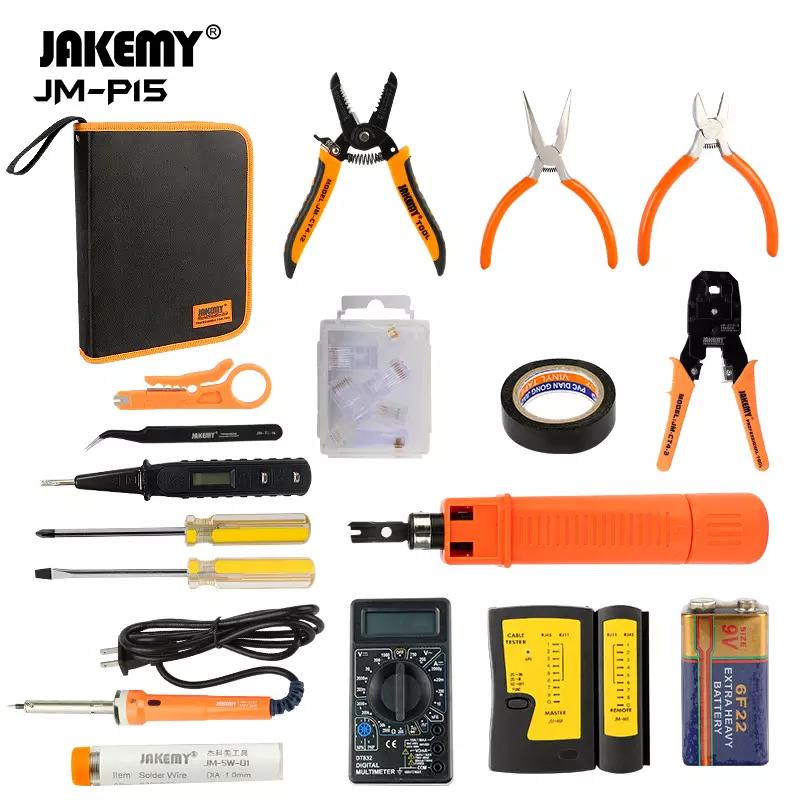
The specs are straightforward and field-practical: the kit measures 295 × 238 × 55 mm and weighs 1.75 kg gross. The bits are CR-V steel for durability, and the handles feature a PP&TPR non-slip grip that holds up well under real working conditions.
Furthermore, we offer low MOQ and free samples for evaluation before commitment. We also offer full OEM & ODM support, so the kit can carry your brand identity and be tailored to your operational requirements.
Conclusion
A solid technician tool kit is a one-time decision that pays off on every job your team takes. The Jakemy JM-P15 is a strong starting point, being comprehensive, compact, and available with the flexibility that professional procurement demands.
Contact Jakemy today to request a free sample or discuss OEM customization options for your business.