
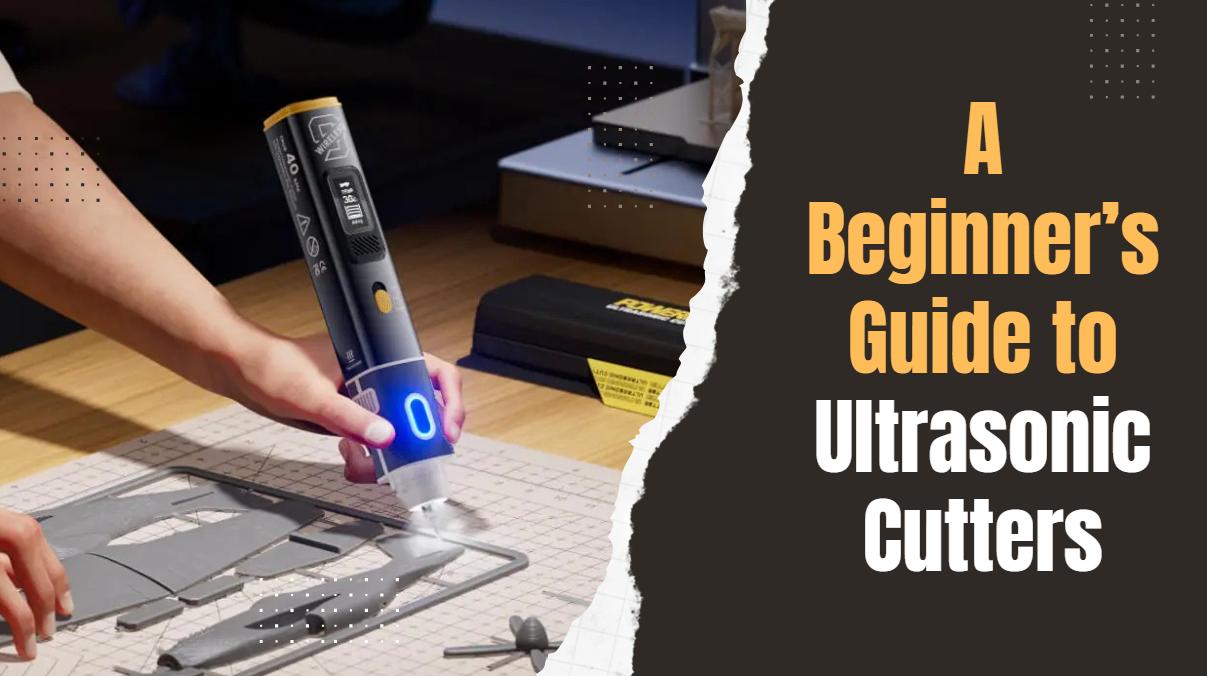
Ultrasonic cutters are gaining attention among model makers, DIY enthusiasts, repair professionals, and manufacturers who need cleaner, more controlled cuts. Using rapid blade vibration to reduce cutting resistance, they allow users to work with many difficult materials without having to apply much force by hand.

If you are new to this technology, the terminology and product choices may seem complicated. This guide explains the main components of an ultrasonic cutter, how it works, what it can cut, and how it compares with a traditional hobby knife. Read on to learn more.

Key Components of an Ultrasonic Cutter

Although designs vary, most ultrasonic cutters contain five essential components.

1. Oscillator

The oscillator, sometimes called an ultrasonic generator, converts electrical power into a high-frequency electrical signal. It controls the frequency delivered to the cutting system and helps the blade vibrate consistently.

2. Transducer

The transducer converts the electrical signal into mechanical vibration, usually by means of piezoelectric elements. It creates the rapid movement required for ultrasonic cutting. The vibration is then amplified and passed to the blade.

3. Handle

The handle houses or connects to the transducer and allows the user to guide the tool. A well-designed handle should provide a secure grip and remain comfortable during detailed work.

4. Blade

The blade transfers ultrasonic vibration to the material. Different blade shapes can be used for straight cuts, curved details, trimming, or surface finishing. Blade material also affects durability and cutting performance.

5. Battery or Power Cord

Some cutters use a rechargeable battery, while others receive continuous power through a cord. Battery-powered models offer portability, whereas corded models avoid charging interruptions and may be better suited to longer work sessions.

How Does an Ultrasonic Cutter Work?

An ultrasonic cutter converts electrical energy into high-frequency mechanical vibration, typically above 20,000 times per second. This vibration is transmitted to the blade, which moves back and forth over a very short distance, too small to see with the naked eye.

When the blade touches a material, the vibration reduces friction and cutting force at the contact point. As a result, the user does not need to press as hard as with a standard knife. Lower cutting force also makes it easier to follow detailed lines and helps reduce deformation in soft or flexible materials such as foam and rubber.

What Materials Can an Ultrasonic Cutter Cut?

The exact cutting capacity depends on the cutter’s power, blade design, and the thickness and density of the workpiece. Common applications include:

  • Carbon fiber:Useful for trimming thin carbon-fiber sheets and composite parts. Proper dust extraction and respiratory protection are important.
  • Acrylic:Suitable for detailed trimming, although users should test a spare piece because friction may soften the edge.
  • EVA foam:Produces controlled cuts with less compression than many hobby knives.
  • Leather:Helps create accurate shapes and smooth outlines for craft projects.
  • Metals:Certain thin or soft metal pieces may be cut or trimmed, depending on the cutter and blade. An ultrasonic cutter is not a substitute for a saw when working with thick metal.
  • Wood:Can handle thin wood sheets and small model-making components.
  • 3D-printed resin:Useful for removing supports, trimming edges, and refining printed models after curing.
  • PCBs:Can assist with controlled PCB trimming in suitable applications. Users must manage fiberglass and conductive dust safely.

Watch this ultrasonic cutter demonstration video to see how the tool performs on different materials.

Always test an offcut before starting the final piece. Material thickness, composition, and heat sensitivity can significantly affect the result.

Ultrasonic Cutter vs. Hobby Knife

Both tools are useful, but they suit different budgets and workloads.

Comparison Point
Ultrasonic Cutter
Hobby Knife
Precision
Easier to guide through resistant materials with less hand pressure
Precise on thin, easy-to-cut materials
Cutting Quality
Often creates cleaner edges with less crushing, tearing, or deformation
Results depend heavily on blade sharpness and manual force
User Experience
Requires power but reduces effort during repeated or difficult cuts
Simple, portable, and inexpensive, but may cause more hand fatigue

A hobby knife remains practical for light, occasional tasks. An ultrasonic cutter is often the better choice for users who regularly cut foam, resin, composites, leather, or other resistant materials. For a more detailed evaluation, read our Ultrasonic Cutter vs. Hobby Knife comparison guide.
Why Choose the Jakemy Ultrasonic Cutter & Polisher?

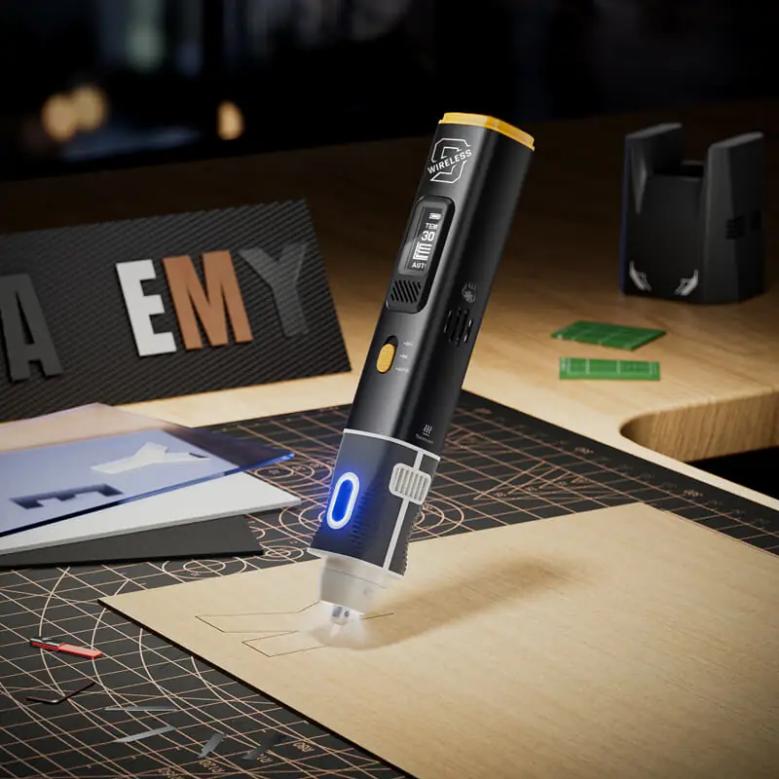
The Jakemy JM-Y10 Ultrasonic Cutter & Polisher combines cutting and surface-finishing functions in one precision tool. It provides a 35 W power output and operates at a 40 kHz vibration frequency, helping the blade move through suitable materials with reduced resistance.

The JM-Y10 uses a Type-C corded power connection instead of a built-in battery, so users do not need to worry about running out of power during long work sessions. For those who prefer a cordless tool, the JM-Y09 Ultrasonic Cutter & Polisher is a more suitable option. It offers 30 W of power at the same 40 kHz frequency, with a maximum runtime of 30 minutes.

Both models feature an aluminum-alloy handle for a durable body and an SK5 high-carbon-steel blade designed for practical cutting performance. They are suitable for model making, DIY projects, 3D-print post-processing, craft work, and other detailed cutting tasks. They are also a useful product option for distributors and retailers looking to expand beyond traditional hobby knives.

Conclusion

An ultrasonic cutter offers a practical way to make accurate cuts while applying less manual force. Understanding its oscillator, transducer, handle, blade, and power source will help beginners choose and use the tool more confidently.

For users who frequently work with foam, resin, leather, acrylic, composites, or model-making materials, the Jakemy JM-Y10 and JM-Y09 provide a versatile combination of ultrasonic cutting and polishing. Contact Jakemy to learn more about the JM-Y10, request product information, or discuss wholesale requirements