
In electronics repair, the fastest tool is not always the most appropriate one. A technician assembling dozens of devices may benefit from powered screw driving, while someone handling a delicate connector or a tiny fastener may need the slower feedback of a manual driver. Choosing between the two is less about deciding which tool is better and more about matching the driving method to the task.
At Jakemy, we design precision screwdriver tools for different repair workflows. For repair shops, tool distributors, and maintenance-equipment buyers, understanding when to use electric power and when to switch to manual control can help improve workstation efficiency without overlooking fastener protection.
When Does an Electric Screwdriver Make More Sense?
An electric screwdriver is especially useful when a task involves repeated screw removal or installation. Instead of turning each fastener entirely by hand, technicians can use motorized rotation to reduce repetitive wrist movements and keep routine work moving.
This can be valuable in mobile-phone maintenance, computer repair, camera servicing, and other electronics workflows where multiple small screws must be removed before components can be accessed. For repair businesses handling a steady volume of similar jobs, powered driving may also help standardize routine steps between technicians.
However, speed should not be the only consideration. Small electronic devices often use delicate threads, plastic housings, and fasteners that can be damaged by excessive torque. The operator must still select the correct bit, align it with the screw, and control pressure throughout the process.
Why adjustable torque matters
Torque determines the rotational force applied to a fastener. If the force is too low, a screw may not turn as expected; if it is too high, the screw head, thread, or surrounding material may be damaged.
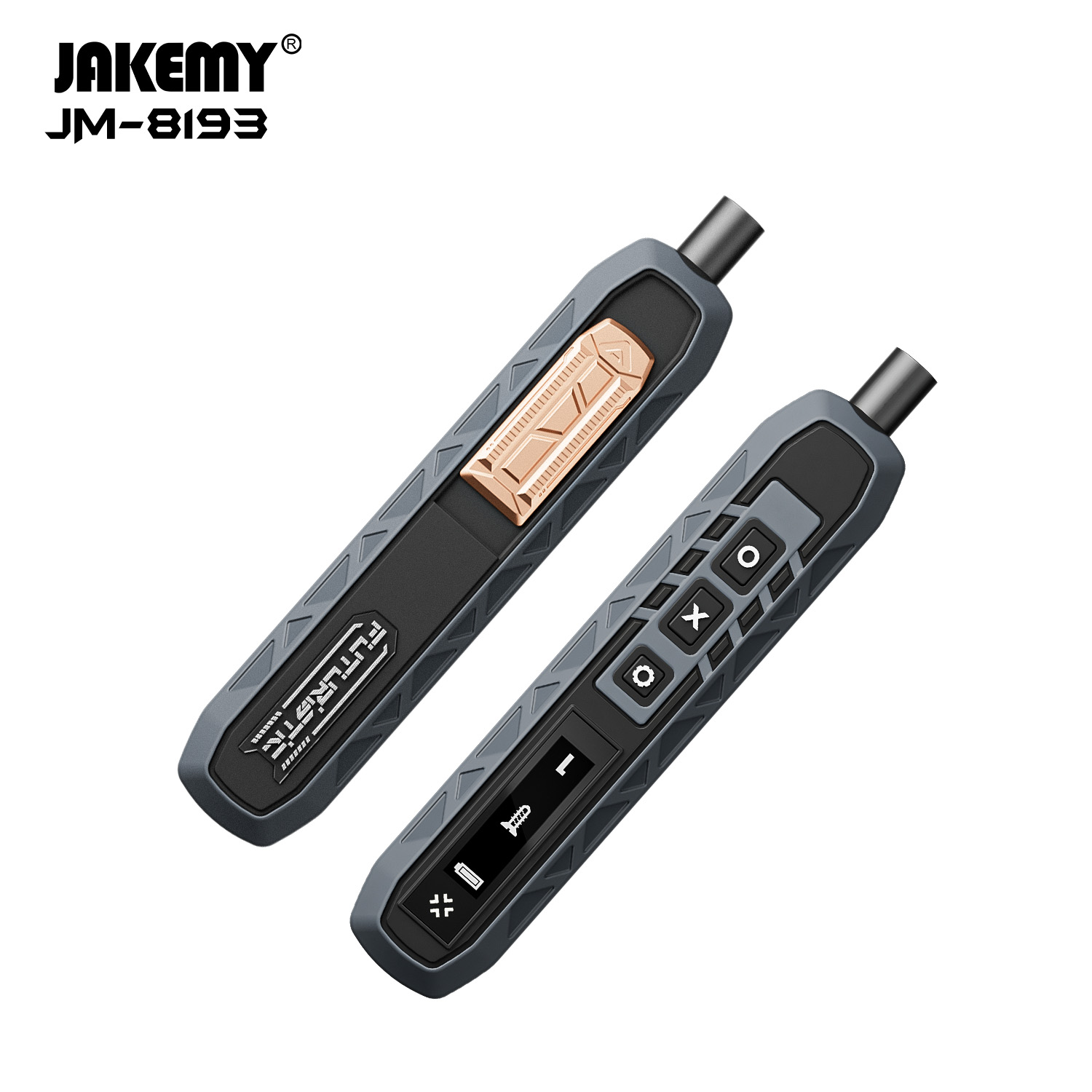
The Jakemy JM-8193 is a cordless electric screwdriver set with three electric torque settings:
- Low: 0.16 N·m
- Medium: 0.20 N·m
- High: 0.30 N·m
These settings allow technicians to choose a suitable starting level for different fasteners and working conditions. They do not eliminate the need for judgment: the appropriate setting depends on the device, screw size, material, and manufacturer’s service guidance. When a fastener is particularly delicate, starting at a lower setting and checking the result is generally more prudent than immediately selecting the highest setting.
When Is a Manual Driver the Better Choice?
Manual driving gives the operator direct control over rotation and resistance. Because the technician supplies the turning force, changes in screw resistance can be easier to notice. This feedback is useful when starting a screw, working close to fragile components, or making a final adjustment that requires a careful touch.
Manual operation is also appropriate when a fastener needs more force than the electric mode should apply, provided the screw and assembly are designed to tolerate it. For example, a technician may use powered rotation to remove or install a fastener and then switch to manual control for a cautious final check.
The important distinction is that manual operation is not automatically safe for every precision task. Excessive hand force can still strip a screw or damage a thread. Correct bit selection, alignment, and a controlled grip remain essential.
The JM-8193 supports manual operation with a maximum stated torque of 3.0 N·m. This provides an alternative when powered driving is unsuitable or when additional manual control is needed. Operators should follow the equipment manufacturer’s specifications rather than treating the maximum value as a target for every screw.
Can One Tool Handle Both Types of Work?
For many repair teams, the most practical setup is not an all-electric or all-manual approach. It is a tool that supports both methods, allowing technicians to change their technique as the job progresses.
The Jakemy electric screwdriver JM-8193 combines motorized driving with manual operation in one cordless tool. Its 180-in-1 configuration includes 144 CR-V bits, four longer S-2 bits, sockets, opening tools, tweezers, spudgers, a suction cup, and an extension rod. The broad assortment supports work on devices such as smartphones, laptops, tablets, watches, and cameras, subject to the fasteners and procedures involved.
Its smart LED battery display helps users check remaining power, while the 500mAh rechargeable battery is specified for approximately 100–120 minutes of working time. The container uses a magnetic storage structure to help keep bits and accessories organized. These features are relevant to workshops where tools need to be accessible, easy to return to storage, and ready for recurring repair tasks.
A useful workflow is to use electric mode for suitable repetitive driving, switch to manual operation when more direct feedback is needed, and always finish according to the device’s specified fastening requirements. Neither mode replaces proper technique or a torque specification when the equipment manufacturer provides one.
What Should B2B Buyers Consider Before Selecting a Driver?
For wholesalers, repair-tool distributors, and service businesses, the choice should reflect the work customers actually perform.
Consider task volume. Workstations handling frequent, repetitive repairs may benefit from electric driving. Teams completing occasional jobs or tasks that demand close tactile feedback may rely more heavily on manual tools.
Review torque and bit compatibility. A broad bit selection is useful only when the profiles and sizes match the devices being serviced. Buyers should also compare the electric torque range with the requirements of their target applications.
Evaluate storage and accessories. A combined kit can simplify purchasing and keep supporting tools together. The JM-8193’s container measures 210 × 85 × 82 mm, a practical specification to consider when planning retail packaging, workshop storage, or portable tool kits.
Confirm supply details. Jakemy lists the JM-8193 with a minimum order quantity of 100 pieces and sample support, alongside OEM and ODM services. Distributors developing a product assortment should confirm current availability, customization scope, packaging, and commercial terms with our team before placing an order.
Choosing by Control, Not Just Speed
Electric and manual drivers serve different purposes, and neither needs to replace the other. Powered rotation can make repeated work more efficient, while manual operation gives technicians a direct way to control turning force and feel resistance. The best choice depends on the fastener, the material, and the stage of the repair.
At Jakemy, we view the JM-8193 as an option for buyers seeking a versatile precision tool that brings both driving methods and a broad accessory assortment into one organized kit. For businesses supplying electronics repair professionals, matching the tool’s torque range, bit selection, and operating modes to real customer needs is a more reliable purchasing decision than choosing by speed or piece count alone.