
Choosing a Torx fastener involves more than matching a star-shaped head to a screwdriver. The correct size affects tool engagement, assembly efficiency, and the risk of damaging fasteners during installation or maintenance. For distributors, hardware suppliers, and electronics repair businesses, understanding Torx sizing also helps build a more useful tool assortment for different customer groups. At Jakemy, we recommend starting with the fastener’s actual dimensions and application rather than choosing a size based on appearance alone.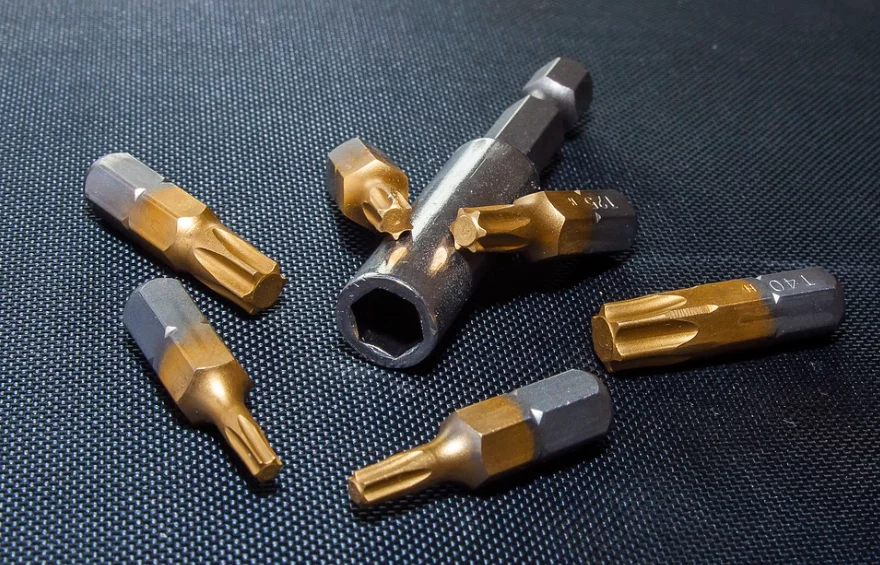
What Is a Torx Screw, and Why Does Size Matter?
A Torx screw has a six-pointed star-shaped recess designed to engage with a matching Torx driver. Compared with some conventional drive designs, this geometry can distribute contact forces across multiple points and help reduce slipping when the bit fits correctly.
Torx sizes are commonly identified by a T followed by a number, such as T2, T5, T8, or T10. The number identifies the drive size; it does not directly indicate the screw’s overall length or thread diameter. Two screws with similar external dimensions may require different driver sizes because their recesses differ.
For businesses sourcing repair tools, this distinction is important. A distributor supplying electronics technicians may need smaller Torx sizes for compact devices, while customers maintaining appliances or mechanical assemblies may require larger options. Understanding the intended application is the first step toward selecting a useful range.
How Do You Identify the Correct Torx Size?
A reliable approach is to check the fastener specification or use a properly sized Torx bit to confirm the fit. If documentation is available, consult the manufacturer’s recommended driver size before beginning work.
When the specification is unknown, start with a clean, undamaged screw head and compare suitable bits carefully. The correct bit should seat fully in the recess, with minimal movement between the tip and the six-point pattern. A bit that feels loose may be too small, while one that cannot seat completely may be too large or the wrong type.
Avoid forcing a bit into the recess or testing the fit by applying substantial turning force. This can damage the screw head and make later removal more difficult. If a fastener has already been worn or deformed, the original size may be harder to identify, so additional care is necessary.
For repair shops and service providers, a labeled bit assortment helps technicians identify sizes consistently. For distributors, clear size markings and an accurate specification list make it easier for customers to select the right tools without relying on guesswork.
Which Torx Sizes Should Your Business Stock?
There is no single Torx assortment that suits every market. The best selection depends on the products customers service and the fasteners used in those products.
Smaller sizes, including T2, T3, T4, and T5, are relevant to some compact electronics and precision repair tasks. T6, T8, and T10 are also common sizes to consider when evaluating a precision tool assortment. Larger sizes, such as T15 and T20, may be useful for equipment and assemblies that use correspondingly larger Torx drives. These are general examples, not a guarantee that every device in a category uses the same size.
Before expanding your inventory, review service manuals, existing customer orders, and the fasteners commonly encountered in your target market. Electronics repair specialists may value a broad range of small bits, while industrial maintenance customers may prioritize larger drives or different tool lengths.
At Jakemy, we offer screwdriver bits and precision tool sets in different configurations. Buyers should compare the actual bit list for each model against their customers’ needs instead of assuming that a higher piece count automatically means better coverage.
Should You Choose Standard or Security Torx?
Not all six-point star-shaped recesses are identical. Standard Torx screws have a conventional star-shaped recess, while security Torx designs commonly include a central pin. A compatible security bit has a corresponding opening to accommodate that pin.
This difference matters when sourcing tools for electronics, equipment maintenance, or repair services. A standard Torx bit may not fit a security fastener, even if the nominal size appears similar. Before ordering, check whether the applications require standard Torx, security Torx, or both.
Security features should not be confused with size differences. A T8 security bit, for example, is intended for a security-style T8 recess; it is not a universal substitute for every T8 fastener. Buyers should confirm both the drive size and the recess design when reviewing product specifications.
For wholesalers and tool brands, stocking the correct variants can reduce mismatches between customer expectations and the supplied kit. It also creates a clearer basis for product descriptions and technical support.
What Other Factors Matter Beyond Size?
A correctly sized bit is essential, but it is not the only consideration. Bit material, length, access clearance, handle design, and storage can all affect how well a tool fits a working environment.
Short bits may be convenient for compact kits, while longer bits can help reach recessed fasteners when the surrounding geometry allows sufficient access. However, a longer bit does not automatically provide better access in every situation. Buyers should consider the depth and clearance of the assemblies their customers work on.
Material specifications also deserve attention. Jakemy offers bits made from materials including CR-V and S-2 steel across different products. The appropriate choice depends on the tool’s design, intended use, and stated specifications; material names alone should not be treated as proof of performance under every condition.
For businesses purchasing in volume, consider how bits are labeled, stored, and replaced. An organized case can make it easier for technicians to return each bit to its proper position and identify missing sizes. These practical details become particularly relevant when a tool set is shared across a team.
How Can Buyers Select the Right Torx Drivers and Bits?
For B2B buyers, selecting the right Torx drivers and bits requires more than checking the available sizes. The assortment should match customers’ applications, fastener types, and working conditions. Electronics repair businesses may need small precision bits and compact drivers, while equipment maintenance customers may require larger sizes, longer bits, or security Torx options.
Start by identifying the Torx sizes your target customers use most frequently. Review service manuals, existing customer orders, and common repair requirements to determine which sizes to stock. If customers work with security fasteners, confirm whether they need security Torx bits with a central opening rather than standard Torx bits. Checking these requirements before ordering can help reduce compatibility issues.
Next, compare the specifications of individual drivers and bits. Consider bit size, length, material, handle design, and access clearance. For example, precision repair work may call for smaller bits and handles suited to detailed operations, while recessed fasteners may require a different bit length. Buyers should verify these details against the product specifications instead of assuming that tools with similar appearances offer the same functionality.
At Jakemy, we offer screwdriver bits and precision tool sets in different configurations. Buyers should review the included bit sizes and accessories to determine whether a set meets their customers’ needs. For distributors and private-label buyers, our team can also discuss OEM and ODM inquiries based on the intended market, required assortment, and packaging preferences.
A well-selected Torx tool range combines the correct sizes with suitable driver designs and verified product specifications. By evaluating real customer requirements before purchasing, businesses can build a more practical assortment and make it easier for end users to find the right tools for their work.