
In mobile phone repair, the smallest components can create some of the biggest handling challenges. Flexible cables, tiny connectors, screws, and delicate internal parts often require more control than fingers alone can provide. Choosing tweezers is therefore not just about finding a pointed tool; technicians need to consider tip shape, access angle, grip, and the type of component being handled. At Jakemy, we provide precision repair tools designed for electronics maintenance, and we recommend selecting tweezers according to the actual tasks performed at the workbench.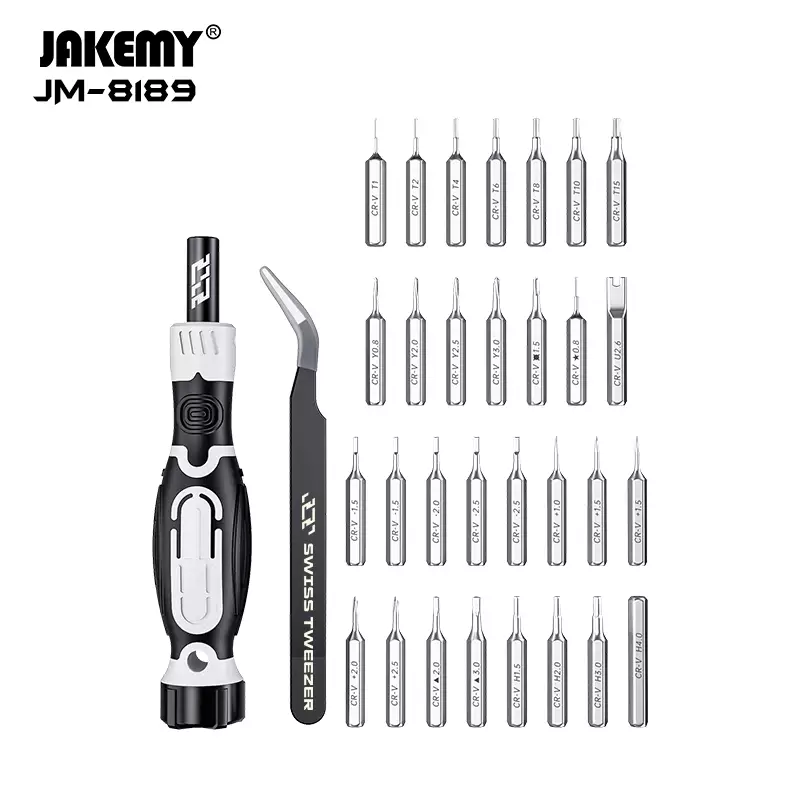
Why Does Tweezers Design Matter in Mobile Repair?
Mobile devices contain closely arranged components, leaving limited room for tools and fingers. Tweezers help technicians pick up, position, or hold small parts during disassembly, inspection, and reassembly. The right design can improve handling control and reduce unnecessary contact with surrounding components.
However, not all tweezers suit every task. A pointed tip may be useful for accessing a narrow space, while a curved tip can provide a different approach angle when components are partly obstructed. Choosing a tool based only on appearance may lead to awkward handling or poor visibility.
For repair shops and distributors, understanding these differences helps determine which accessories belong in a mobile repair kit. Rather than treating tweezers as a minor add-on, consider them part of the overall workflow alongside precision screwdrivers, opening tools, and component storage.
Which Tip Shape Should You Choose?
Tip geometry is one of the first things to assess when selecting tweezers.
Straight pointed tweezers are useful when technicians need to reach small parts from a relatively direct angle. They can help position tiny components or handle items in accessible spaces. Because the tips are narrow, users should take care not to apply unnecessary pressure to fragile parts.
Curved tweezers allow technicians to approach components from an angle. This can be helpful when a nearby component, housing edge, or cable makes a straight approach inconvenient. The curve may also improve visibility by moving the technician’s hand away from the immediate work area.
Flat or broad-tipped tweezers, where suitable for the application, can provide a wider contact area for handling certain flat or delicate items. Their usefulness depends on the component’s shape and the available clearance.
When sourcing Jakemy tweezers mobile repair accessories, buyers should check the actual tip design and dimensions rather than assuming that all tweezers in a kit serve the same purpose. A repair center handling a wide variety of devices may benefit from having more than one tip style available.
How Should You Match Tweezers to Different Repair Tasks?
Start by identifying the type of component the technician needs to handle. Small screws and loose hardware may require a different approach from flexible cables, connectors, or thin insulating materials. The tool should provide sufficient control without putting unnecessary pressure on the part.
For example, when positioning a small component, use the tweezers to guide it rather than squeeze it tightly. When working near a flexible cable, avoid pulling or twisting the cable with the tips. For parts located deep inside a device, consider whether the tool’s length and angle allow a clear view of the working area.
Tweezers should not replace tools designed for prying, cutting, or electrical testing. Using them for tasks beyond their intended purpose can deform the tips or damage the component. Technicians should also follow device-specific repair procedures and observe appropriate electrostatic discharge precautions when handling sensitive electronics.
At Jakemy, we approach mobile repair tools as a coordinated set of equipment. Tweezers work best when selected alongside suitable screwdriver bits and opening accessories, allowing technicians to use the right tool at each stage of a repair.
What Should You Look for in Grip and Construction?
Tip accuracy is important, but the handle also affects control. A tool that is difficult to hold steadily may make precise positioning more challenging, particularly during repetitive work. Buyers should consider the tweezers’ overall balance, spring resistance, surface finish, and how comfortably technicians can operate them.
The tips should meet appropriately and remain aligned when the tweezers are closed. If they cross, bend, or leave a noticeable gap, handling small components may become less reliable. Before putting a new tool into service, inspect its tips and test the opening and closing action without applying excessive force.
Material and finish are also worth reviewing, but buyers should avoid assuming that one material is suitable for every environment. Where work involves electrostatic-sensitive components, confirm whether the specific tool is designed and rated for ESD-sensitive applications. Do not assume that ordinary metal tweezers provide electrostatic protection.
For B2B purchasers, clear specifications help technicians understand the tool’s intended use and help distributors avoid making unsupported performance claims.
How Can Repair Businesses Keep Tweezers in Good Condition?
Precision tools need careful storage and handling. Dropping tweezers onto a hard surface can misalign their tips, while using them to pry apart tightly fitted housings can bend or blunt the ends. Adhesive residue and debris can also interfere with precise handling.
We recommend keeping tweezers in a designated storage position when they are not in use. Clean them using a method appropriate for the material and the residue involved, and inspect the tips regularly for deformation or corrosion. If the tips no longer align correctly, replace the tool rather than forcing them together.
Repair businesses can establish a simple inspection routine at the beginning or end of each shift. This is particularly useful when tools are shared among technicians. For distributors supplying repair equipment in bulk, practical handling and storage guidance can also add value beyond the product itself.
What Should B2B Buyers Consider When Sourcing Tweezers?
For wholesalers, repair-equipment suppliers, and mobile service businesses, the selection process should begin with the target application. Determine whether customers primarily handle small hardware, work around crowded internal assemblies, or need several tip styles for different procedures.
Next, review the tool’s material, dimensions, tip shape, intended use, and packaging. If tweezers will be included in a broader mobile repair kit, assess how they complement the screwdriver bits, opening tools, and other accessories. The goal is to create a coherent tool configuration rather than adding accessories simply to increase the total item count.
Our mobile phone repair tools guide explains how different tools support mobile device maintenance. At Jakemy, we also provide wholesale and OEM/ODM services, allowing business customers to discuss product and packaging requirements with our team.
The right tweezers depend on the components being handled, the available working space, and the level of control required. By comparing these practical factors before purchasing, businesses can select Jakemy tweezers mobile repair accessories that fit their customers’ workflows and build a more useful mobile repair tool offering.