
Opening a smartphone, tablet, or computer often requires more care than removing a few screws. The wrong bit can damage a fastener, excessive force can mark a housing, and an unsuitable opening tool may damage clips or nearby components. For repair shops, maintenance teams, and tool distributors, these mistakes can lead to avoidable rework and inconsistent service quality. At Jakemy, we believe that choosing suitable tools and understanding how to use them are equally important parts of an effective electronics repair workflow.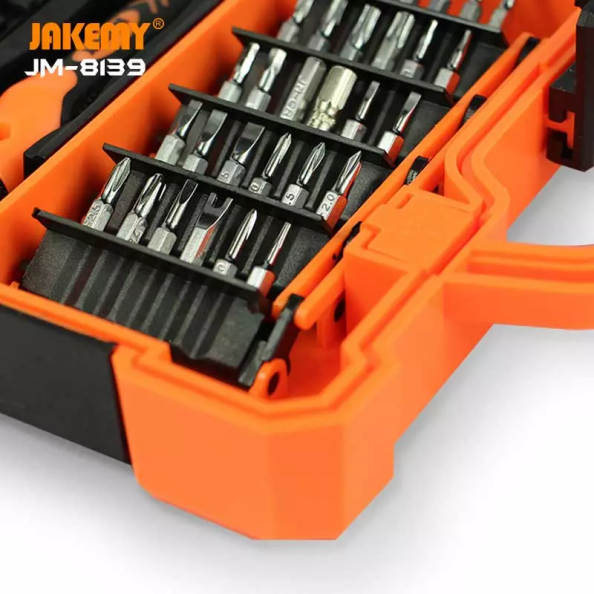
Using the Wrong Screwdriver Bit
One common mistake is selecting a bit because it looks similar to the screw head rather than checking its exact shape and size. A loose fit can cause the tip to slip, wear down the screw head, or scratch nearby surfaces. Continuing to turn a poorly fitted bit can make the fastener even harder to remove.
To avoid this problem, inspect the screw before starting and choose the closest-fitting bit from the available assortment. The tip should sit securely in the screw head without excessive movement. Apply steady pressure along the screw’s axis, and stop if the bit repeatedly slips.
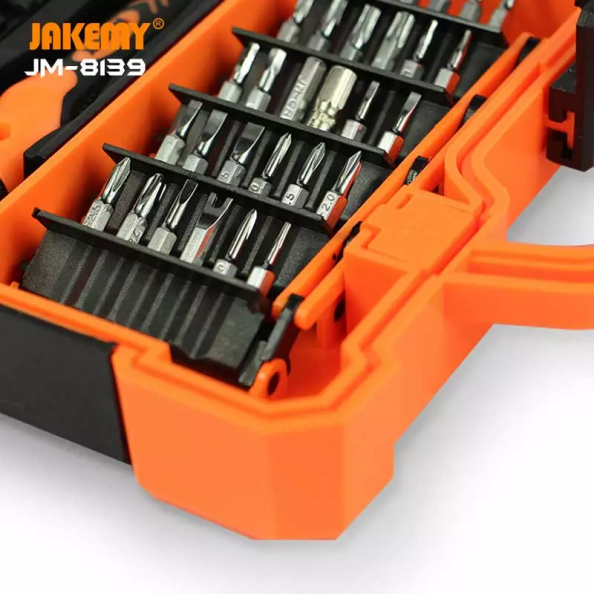
Our Jakemy JM-8139 provides a range of precision bits for different fastener types found in small electronic devices. For repair businesses, it is useful to train staff to identify screw profiles rather than relying on memory or guesswork.
Applying Too Much Force During Disassembly
A second mistake is assuming that more force will make a repair faster. Small screws, plastic clips, adhesive-bonded covers, and delicate housings can be damaged when technicians rush or apply pressure in the wrong direction. A tool that works well on one device may not be appropriate for another.
Begin by checking how the device is assembled and whether the fastener has been fully removed before attempting to separate its housing. Use controlled movements, and never force a cover that remains firmly attached. If resistance increases unexpectedly, pause and reassess the procedure.
The non-slip handle of the Jakemy JM-8139 helps users maintain a stable grip during manual screwdriving. However, grip design cannot replace appropriate technique. Repair teams should follow device-specific service instructions and use only the force required for the task.
Choosing an Unsuitable Opening Tool
Screwdrivers are only one part of electronics repair. Screens, back covers, and internal housings may require opening tools, spudgers, or suction cups. A frequent error is using whichever tool is available, even when its shape or material is unsuitable for the surface being opened.
Before selecting an opening tool, consider the component, the surrounding materials, and the way the housing is secured. Plastic pry tools can help separate gaps while reducing the risk of scratching surfaces. A suction cup can assist with lifting compatible smooth panels, while a metal opening tool may be appropriate for tasks that require a firmer edge. Metal tools should be used carefully to avoid marking surfaces or contacting sensitive internal parts.
Our 47 in 1 screwdriver set, the JM-8139, combines screwdriver bits with accessories such as a roller opening tool, a plastic opening tool, a metal spudger, and a suction cup. The key is not to use every accessory on every repair, but to match each tool to the task.
Losing Screws and Mixing Up Components
Tiny screws are easy to drop, misplace, or mix up during disassembly. This becomes especially troublesome when a device uses fasteners of different lengths or types. Reinstalling a screw in the wrong position may cause fitting problems or damage internal components.
A simple improvement is to organize screws as soon as they are removed. Keep different fasteners separate, follow a consistent disassembly sequence, and avoid placing loose parts near the edge of a workbench. Good lighting and a clear work surface also make small components easier to track.
The JM-8139 comes with a compact storage box that keeps its accessories organized. While the case is designed for tool storage rather than replacing a dedicated parts tray, returning bits and accessories to their designated positions helps technicians maintain an orderly workspace and notice missing items sooner.
Ignoring Tool Condition and Maintenance
Even a well-selected tool can become less effective if it is worn, dirty, or improperly stored. Damaged bit tips may fit poorly, while adhesive residue on opening tools can interfere with handling. Returning accessories loosely to a drawer also increases the chance of losing them or damaging their working edges.
Repair teams should inspect tools periodically, clean away residue using methods suitable for each material, and replace damaged accessories when necessary. After each job, check that all components have been returned to storage. For businesses managing multiple technicians, a brief tool-check routine can help maintain consistent working conditions across service stations.
For distributors supplying a 47 in 1 screwdriver set, maintenance guidance is also useful after the sale. Clear instructions help customers understand that correct handling and storage contribute to the useful service life of their tools.
Choosing a Kit Without Checking the Actual Workload
A final mistake happens before the repair even begins: purchasing a tool kit based only on its piece count or price. Different service operations handle different devices, screw types, and disassembly procedures. A kit that suits routine smartphone maintenance may not cover every specialized repair requirement.
We recommend that procurement teams compare the included bit profiles, opening accessories, storage format, and intended applications with the work their customers perform most often. The JM-8139 is designed for tasks involving mobile phones, computers, tablets, cameras, watches, and other small devices. Businesses should still confirm that its configuration matches their specific service requirements before ordering.
At Jakemy, we support wholesale customers as well as OEM and ODM inquiries. Reviewing the product configuration, packaging, and purchasing requirements in advance can help distributors select tools that fit their market instead of relying on headline specifications alone.
Build Better Repair Habits With the Right Tools
Many common repair mistakes are preventable: match the bit to the fastener, avoid unnecessary force, choose opening tools carefully, organize removed parts, and inspect accessories regularly. These habits help technicians work more consistently and reduce avoidable handling damage.
The Jakemy JM-8139 brings precision screwdriver bits and practical opening accessories together in one organized kit. For repair businesses and tool distributors, it offers a useful starting point for routine electronics maintenance, provided the tools are matched to the application and used with care. At Jakemy, we encourage business partners to consider both tool configuration and correct working practices when building a dependable repair-tool offering.