
Precision repair tasks require tools that provide not only accuracy but also stable control during every operation. As electronic devices become smaller and more complex, technicians need screwdrivers that can support delicate movements while reducing the risk of slipping or damaging components. The handle design of a precision screwdriver plays an important role in improving work efficiency, comfort, and overall repair quality.
How Anti-Slip Handles Improve Control During Precision Repairs
When working with small screws in electronic devices, even a slight movement can affect the repair result. A traditional smooth handle may become difficult to control, especially during long repair sessions or when applying precise rotational force. An anti-slip handle helps technicians maintain a steady grip, allowing them to adjust pressure and direction more accurately.
The textured surface and ergonomic structure of an anti-slip handle provide better contact between the hand and the tool. This design reduces unnecessary movement and allows users to perform detailed operations with greater confidence. For professionals handling mobile phones, computers, and other compact electronic products, improved control can make repair processes smoother and more reliable.
Why Ergonomic Handle Design Supports Long-Term Working Comfort
Precision repair work often involves repetitive movements, which can place stress on the fingers and wrist. A well-designed screwdriver handle is not only about preventing slips but also about supporting a more comfortable working experience.
An ergonomic anti-slip handle allows users to hold the screwdriver naturally and apply force more efficiently. This helps reduce discomfort caused by frequent twisting motions and makes the tool more suitable for extended repair tasks. For repair businesses, choosing precision tools with thoughtful handle designs can help technicians maintain consistent performance throughout daily operations.
Beyond comfort, handle design also influences safety. A secure grip lowers the chance of accidental tool movement, helping protect sensitive electronic parts from scratches or damage. This is especially important when repairing products with delicate internal structures where accuracy is essential.
The Role of Anti-Slip Handles Alongside Other Precision Tool Features
Although the handle is a key part of screwdriver performance, it works together with other features to create a complete repair solution. Magnetic tips, durable materials, and a wide selection of bits all contribute to better efficiency in professional environments.
Magnetic tips help hold small screws securely, making installation and removal easier during detailed repairs. Durable steel construction supports repeated use, while a comprehensive bit selection allows technicians to handle different device types without frequently changing tools.
For businesses sourcing precision screwdrivers, evaluating the overall design is important. A tool that combines grip stability, accurate tips, and reliable materials can better support repair operations and meet the needs of different electronic maintenance applications.
Why Jakemy Focuses on Practical Precision Tool Solutions
At Jakemy, we understand that professional repair work depends on reliable tools designed for real working conditions. Our products are developed with practical features that help users achieve more accurate and efficient repairs.
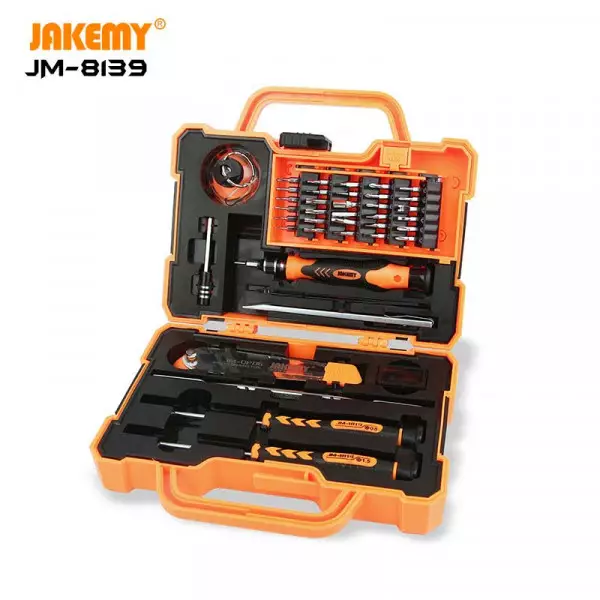
One example is the Jakemy JM-8139, a 47-in-1 electronics screwdriver set designed for mobile phone, PDA, PC, and other electronic device repairs. This set includes high-quality steel screwdriver components, ergonomic anti-slip handles, and magnetic tips to support precise operations. With its versatile configuration, the Jakemy JM-8139 provides essential tools for technicians who need flexibility when handling different repair tasks.
By focusing on functional design and dependable performance, Jakemy continues to provide precision tool solutions that support repair professionals and electronic maintenance needs.