
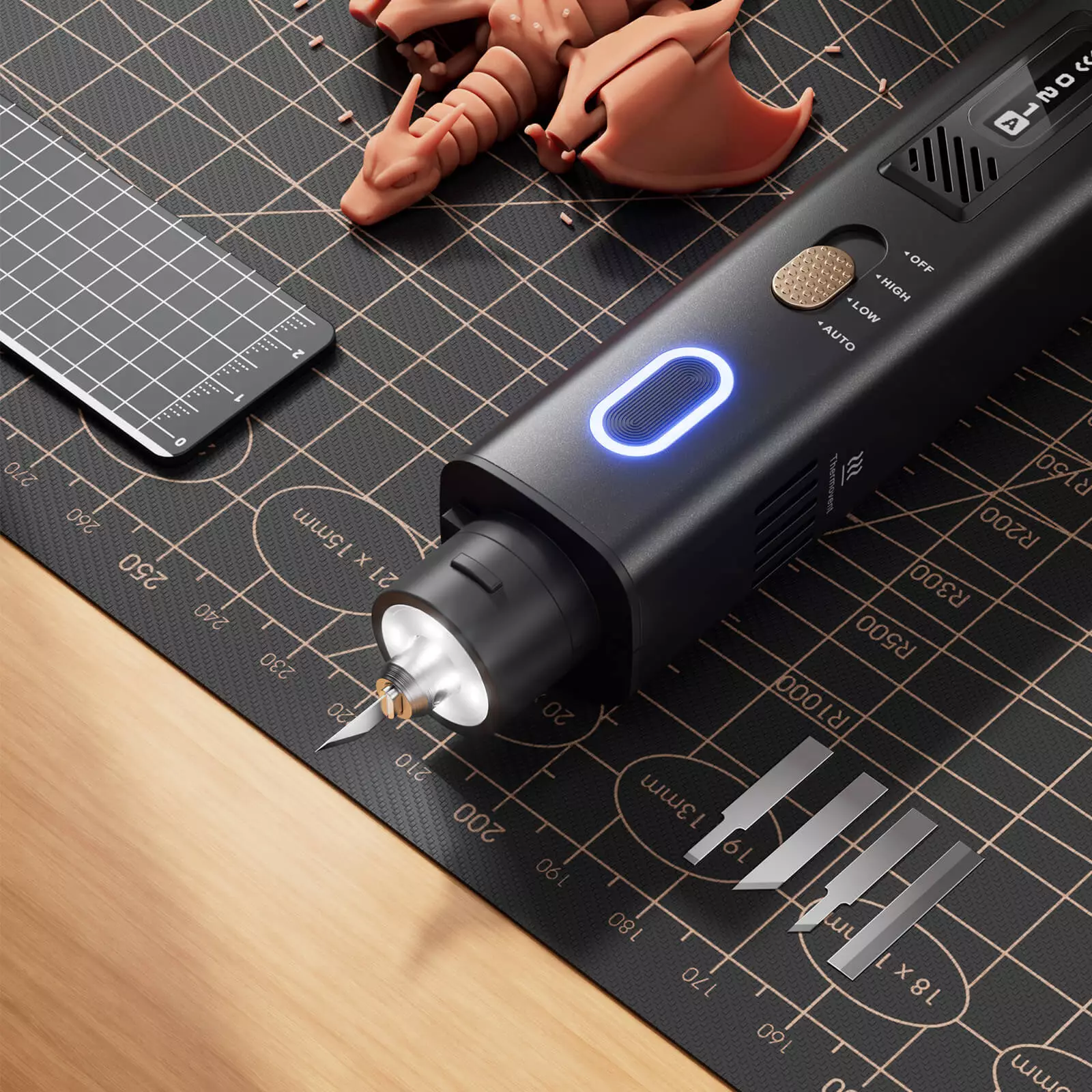
For business operations in manufacturing, prototyping, and material processing, ultrasonic cutting technology has revolutionized how delicate and composite materials are shaped. Yet many users struggle with inconsistent edge quality, melted kerfs, or premature blade wear. Precision is not automatic—it requires deliberate technique and proper equipment setup. These seven expert tips will help you achieve consistently clean cuts across carbon fiber, acrylic, leather, metals, wood, 3D-printed resins, PCBs, and more.
1.Match Power Settings to Material Density
The most common mistake is using the same power level for every material. Soft materials like leather or foam require only 30–40% power. Dense materials like carbon fiber or PCB substrates need 60–70%. Excess power melts edges; insufficient power forces you to press harder, causing deflection. Always start low and increase gradually.
2.Secure Your Workpiece Completely
Any workpiece movement translates directly into uneven cuts. Use double-sided tape, vacuum tables, or clamps to eliminate vibration. For small or irregular parts, consider a sacrificial backing board that the blade can safely penetrate.
3.Use Light, Consistent Pressure
Let the ultrasonic vibration do the work. Apply no more pressure than you would use to guide a pen across paper. Pushing harder increases friction, generates heat, and risks blade breakage. If you feel resistance, slow your traverse rate rather than pressing down.
4.Keep Blades Sharp and Tight
A dull blade creates ragged edges and excess heat. Replace blades after every 2–3 hours of active cutting, or immediately if you notice quality dropping. Also ensure the blade is firmly tightened in the collet—looseness reduces vibration efficiency and causes wandering cuts.
5.Adjust Traverse Speed for Each Material
Cutting speed is as critical as power. Soft materials accept faster speeds (2–3 cm/second). Hard, brittle materials like acrylic or ceramic-filled resins require slower movement (0.5–1 cm/second) to prevent micro-cracking. For thick metals or wood, use the grinding mode first to establish a groove.
6.Clean the Blade Regularly
Residue from adhesives, melted plastics, or composite fibers changes the blade’s resonant frequency and reduces precision. Wipe the blade with isopropyl alcohol after every 10–15 minutes of continuous use. For stubborn buildup, use a soft brass brush.
7.Use the Correct Mode for Each Task
Cutting, grinding, and polishing require different approaches. For clean slicing, use standard cutting mode. For edge refinement or burr removal, switch to polishing mode at reduced power. Using the wrong mode compromises both quality and tool life.
Precision Starts with the Right Equipment
Achieving laboratory-grade ultrasonic cutting precision in production environments requires both expert technique and reliable tools. We at Jakemy engineer our equipment specifically for demanding business applications. Our Jakemy ultrasonic cutter—the Jakemy JM-Y10 and JM-Y10 Pro (35W, 40kHz 2-in-1 handheld ultrasonic cutter & polisher)—features precision cutting, grinding, and polishing modes, making it compatible with carbon fiber, acrylic, leather, metals, wood, 3D-printed resins, PCBs, and more. When your business demands clean, repeatable cuts across diverse materials, trust Jakemy to deliver the performance you need.